

### Blog Post:
No drill wall storage has rapidly become a must-have for renters like Emma—urban apartment dwellers who want functional, stylish storage that won’t jeopardize their security deposit or leave permanent holes behind. While these solutions promise easy installation and clean removal, picking the right method for each space (and weight) is crucial to avoid common pitfalls.
Key Takeaways
- No drill wall storage is best for lightweight items; heavier loads require tension, over-door, or hybrid systems.
- Always follow surface prep and weight limit guidelines—overloading adhesives leads to falls and wall damage.
- Frequent renter complaints include failed adhesive hooks on painted walls and long-term reliability issues. Use proven alternatives for heavy items.
- Quick verdict — what works (and what doesn’t) for renters
- The no-drill toolbox — types of renter-safe systems explained
- Realistic weight limits & safety margins (the most important buying rule)
- Command-hook alternatives — what users complain about (and why)
- Best damage-free options when you need to hold heavier loads
- Surface prep & removal — exact steps to avoid paint and drywall damage
- What competitors miss — deeper technical topics you need to know
- Cost vs durability — reusable strips vs single-use hardware
- Product checklist — what to look for before you buy
- Real-world case studies & failure modes (short examples)
- Quick buy guide — best picks by use case + CTA
- FAQ
Quick verdict — what works (and what doesn’t) for renters
For urban renters in small apartments, the most reliable no drill wall storage options depend entirely on the item’s weight and your wall’s surface. Adhesive hooks and strips are great for lightweight decor; tension-mounted or over-door systems work for heavier kitchenware or books; hybrid/removable shelving is ideal for in-between. Expect tradeoffs: adhesives can fail on painted drywall or if overloaded, while tension and over-door options are bulkier but usually safer. 2024 data shows the global floating-shelf market at $1.29B, with no-drill storage a fast-growing, renter-driven but still modest subcategory [source].

The no-drill toolbox — types of renter-safe systems explained
The modern renter-friendly wall organization toolbox includes several key no drill wall storage methods, each with its best use:
- Adhesive Strips & Hooks: Ideal for lightweight items like decor, utensils, small plants, and frames. Choose certified, branded products like Command or Gorilla for a safer bet. (Consumer Reports)
- Adhesive-Mounted Shelves: Minimalist floating shelves with adhesive backings work well for spices, toiletries, and small bathroom or entryway items. Reviewers praise these for style and fast installs (Apartment Therapy).
- Tension-Pole Shelving: Runs floor to ceiling with pressure fit—holds cookware, books, and heavier decor. Perfect for renters who need secure, damage-free support above 10 lb (see options).
- over-the-door kits: Hooks or racks that hang over the door—best for bathrooms, pantries, and closet organization with zero drilling. Installs in minutes, supports moderate weight.
- Pegboards & Grid Systems: Organize work-from-home accessories, kitchen gadgets, hobby supplies. Some stick with adhesives, some use light pressure bars for removable shelving (Smart Space Living).
- Freestanding Units: No install required—consider for heavy books or cookware if wall-mount isn’t an option.
Users praise adhesive-mounted shelves and tension-pole or over-the-door kits for fast, damage-free appeal. But each system thrives in specific rooms and weight categories—so choose carefully for each space and load.
Realistic weight limits & safety margins (the most important buying rule)
The most important rule for damage free wall mount storage is realistic weight discipline. Despite manufacturer claims, real-world results show adhesives are only reliable up to 5–10 lb on drywall and up to 15 lb on tile or glass. Exceeding about 70% of the advertised limit frequently leads to sagging, falling items, torn paint, and expensive wall repairs.
- Adhesive hooks for heavy items that ignore this margin are a leading cause of failure.
- Always calculate your load and aim for a 30% buffer below the stated limit—the “safety margin.”
- For heavier cookware, books, or small appliances, use mechanical no drill wall storage systems such as tension shelves, floor-leaning shelving, or free-standing racks.
Loading beyond manufacturer specs on fragile surfaces (new paint, textured or wallpapered walls) almost guarantees costly “damage free wall mount” regret. When in doubt, go lighter or choose a non-adhesive solution.
Command-hook alternatives — what users complain about (and why)
While adhesive products are marketed as renter friendly wall organization saviors, users often voice recurring pain points:
- Weight Ratings Overstated: Many command-hook alternatives claim impressive support, but fail on real drywall. Reviews cite “falling items, torn paint, residue,” and a lack of reliability, especially for pans, books, or heavy equipment.
- Surface Sensitivity: Adhesives detach or slide off painted and especially wallpapered surfaces. Expect trouble if you don’t carefully match the adhesive type and prep method to your surface.
- Messy Removals: Removing adhesive shelves or hooks too quickly can chip paint or leave residue behind—an instant red flag for your move-out inspection.
- Lack of Long-Term Reliability: Even if it works at first, humid bathrooms and kitchen steam can weaken bonds. Hooks might fall months later.
- Unclear Guidance: Many competitors skip the critical details on installation, set times, and removal techniques, causing confusion and wall damage.
Real research synthesis: “Users repeatedly report failures (falling items, torn paint, residue) and find command-style hooks unreliable for heavy cookware, books or equipment.” (See example).
Best damage-free options when you need to hold heavier loads
When you need no drill wall storage that can safely hold heavy items (e.g., cast-iron pans, stacks of books, large planters), adhesives are usually not enough. Instead, Emma should consider these proven alternatives:
- Tension-Pole Shelving: Uses mechanical pressure from floor to ceiling, acting as removable shelving with high stability. Great for kitchens and bathrooms.
- Over-the-Door Kits: Use for pantries, closets, or behind doors—quick install, damage free, supports moderate to heavy loads.
- Freestanding Pegboards or Grid Walls: Avoid wall attachment altogether for craft spaces, entry, or workspace organization.
- Hybrid Mounts: Combine minor mechanical anchors with adhesives (e.g., small brackets plus strips) for a safer middle ground, always staying under max weight specs.
Data shows that “many renters choose tension-mounted poles and over-the-door kits when adhesives can’t safely handle weight (research synthesis).” If lease compliance and your security deposit are your top priorities, default to these options for anything even close to mid-weight storage.
Surface prep & removal — exact steps to avoid paint and drywall damage
Proper prep and removal make all the difference. Here’s how:
- Let Paint Cure: Wait at least 7 days after new paint before applying any adhesive product.
- Clean Surface: Wipe down the wall with isopropyl alcohol (not general cleaners), then let it dry fully before sticking anything on.
- Temperature Matters: Install adhesives in rooms between 60–80°F for best results.
- Set/Cure Time: After sticking, wait as long as the package says—usually 1–48 hours—before loading items.
- Gentle Removal: To minimize chips or residue, pull adhesive tabs straight down and keep slow steady pressure.
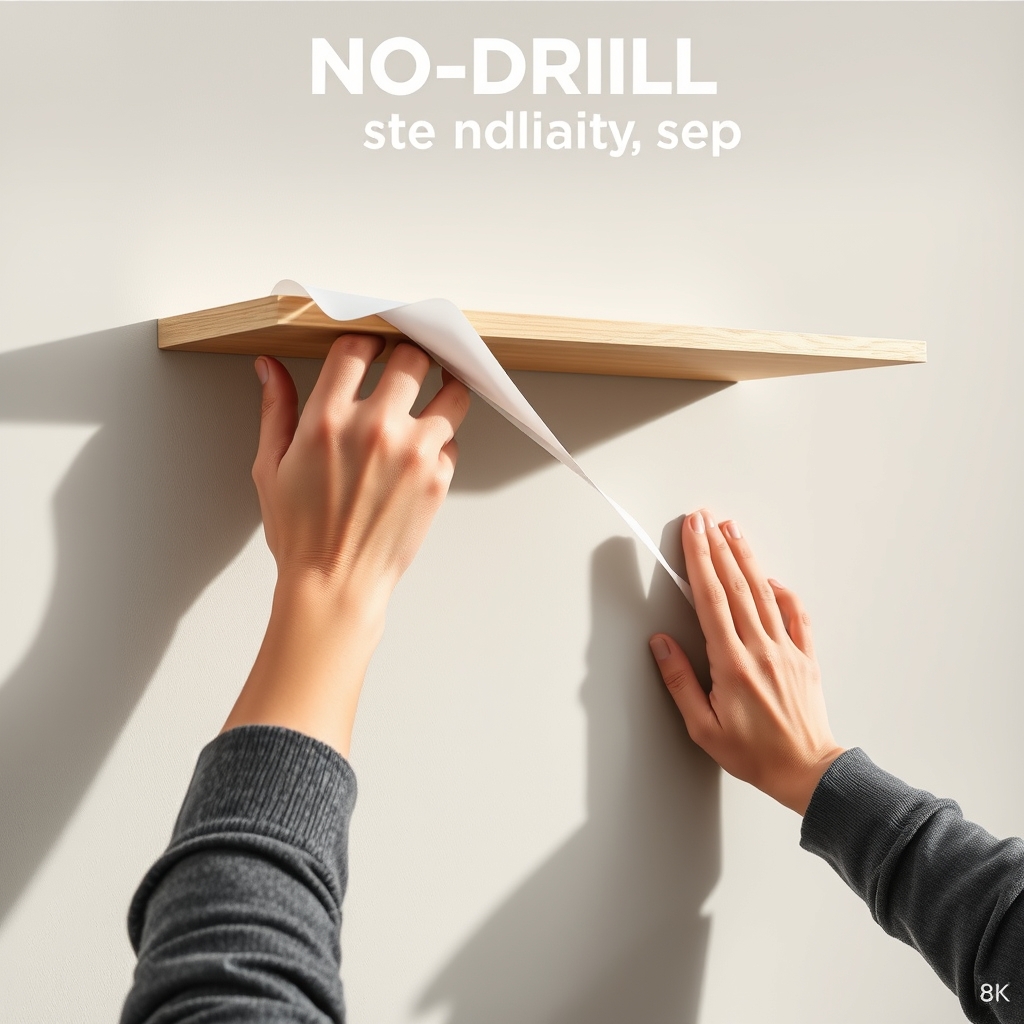
Research shows: “Pro tip: wait the manufacturer’s recommended ‘set/cure’ time before loading.” For additional apartment-friendly transformation tips, see Rental Friendly Renovation: 7 Amazing Ways to Transform Your Apartment.
What competitors miss — deeper technical topics you need to know
Most mainstream guides skip the technical details that prevent costly mistakes. Here’s what matters for no drill wall storage:
- Adhesive Chemistry: There are “removable” adhesives designed to pull off cleanly and “permanent” ones for semi-fixed shelving. Always check product specs.
- Weight-Rating Methods: Some adhesives rate at “short-term, controlled” conditions. You should always use only 70% of the stated limit as your safe working load.
- Hybrid Solutions: Combining tension, pressure plates, or low-profile brackets with adhesives (rather than all-glue) increases reliability for mid-weight applications.
- Long-Term Durability: Adhesives degrade with heat, moisture, and time—expect gradual weakening in kitchens and bathrooms.
- Environmental Impact: Single-use adhesive strips fill landfills. If you move often, look for reusable tension-pole or modular no drill wall storage instead.
Competitor coverage frequently omits: “adhesive chemistries, weight-rating methodology, hybrid solutions, long-term durability and environmental impact (research synthesis).” For more small-apartment ideas, visit Tiny Space Solutions: 7 Amazing Ways to Maximize Space in Small Apartments.
Cost vs durability — reusable strips vs single-use hardware
How do you get the most value out of removable shelving and other renter friendly wall organization? Use this framework for smarter decisions:
- Upfront Cost: Adhesive strips/hooks are cheaper per purchase, but may only last a move or two.
- Per-Installation Cost: Single-use adhesives must be replaced each time; tension/over-door hardware is reusable and pays off after a few moves.
- Lifespan: Adhesive products generally last a year or two before their stickiness fades, especially in humid kitchens/bathrooms.
- Warranty/Reusability: Higher-end hybrid/tension products often have a limited warranty and are made for repeated use—or even resale.
- Financial Planning: If you move apartments yearly, reusable hardware wins quickly on cost. If you’re staging a unit for 1 year with light decor, single-use strips are fine.
Competitor research flagged a missing cost-benefit analysis—always model reuse vs replacement before loading up your cart. For more money-saving home upgrades, check Compact Smart Home Accessories: 7 Best Ways to Save Money.
Product checklist — what to look for before you buy
Before investing in no drill wall storage, run down this pre-buy checklist:
- Certified Weight Rating: Only buy products with explicit, independent lab ratings. Follow the 70% safety rule—e.g., a 10 lb adhesive shelf is only truly safe for 7 lb.
- Surface Compatibility: Confirm with instructions—does it work for paint, wallpaper, tile, or glass?
- Set/Cure Time: Know exactly how long to wait before loading (varies widely).
- Removal Method: Read details—look for “clean removal” and customer photos of after-removal walls.
- Warranty/Return Policy: A safety net for failures or product defects.
- Environmental Info: Prefer reusable, recyclable, or fewer-waste components.
Rule of thumb: “Adhesives typically safe for ~5–10 lb on drywall (up to ~15 lb on tile/glass)—plan purchases accordingly.” For bonus tips, see our guide to Heat Pump Water Heater: 7 Best Ways to Save Money.
Real-world case studies & failure modes (short examples)
Want to avoid the most common fail scenarios with command hook alternatives and removable shelving? Learn from these quick, anonymized examples:
- Case 1: A framed art print fell after a year, breaking the glass and tearing off half an inch of paint. The user had used the correct adhesive hook for the stated weight but exceeded 70% of the manufacturer’s advertised limit. Prevention: Use our checklist—go lighter, use tension or hybrid if heavy, and check the wall finish first. (read more)
- Case 2: Command-strip shelves installed in a humid bathroom slowly sagged, losing grip after six months. The tenant had skipped the proper cure time and didn’t clean with alcohol first. Prevention: Follow prep/removal steps, avoid adhesives in wet environments, and use over-door/tension systems for bathroom storage.
- Case 3: Adhesive hooks left stubborn residue and paint chips across several rooms at move-out. Removal was rushed; no surface photos were documented in advance. Prevention: Always remove gently and slowly, take “before” photos, and patch promptly before inspections. For chips, use a paint touch-up kit.
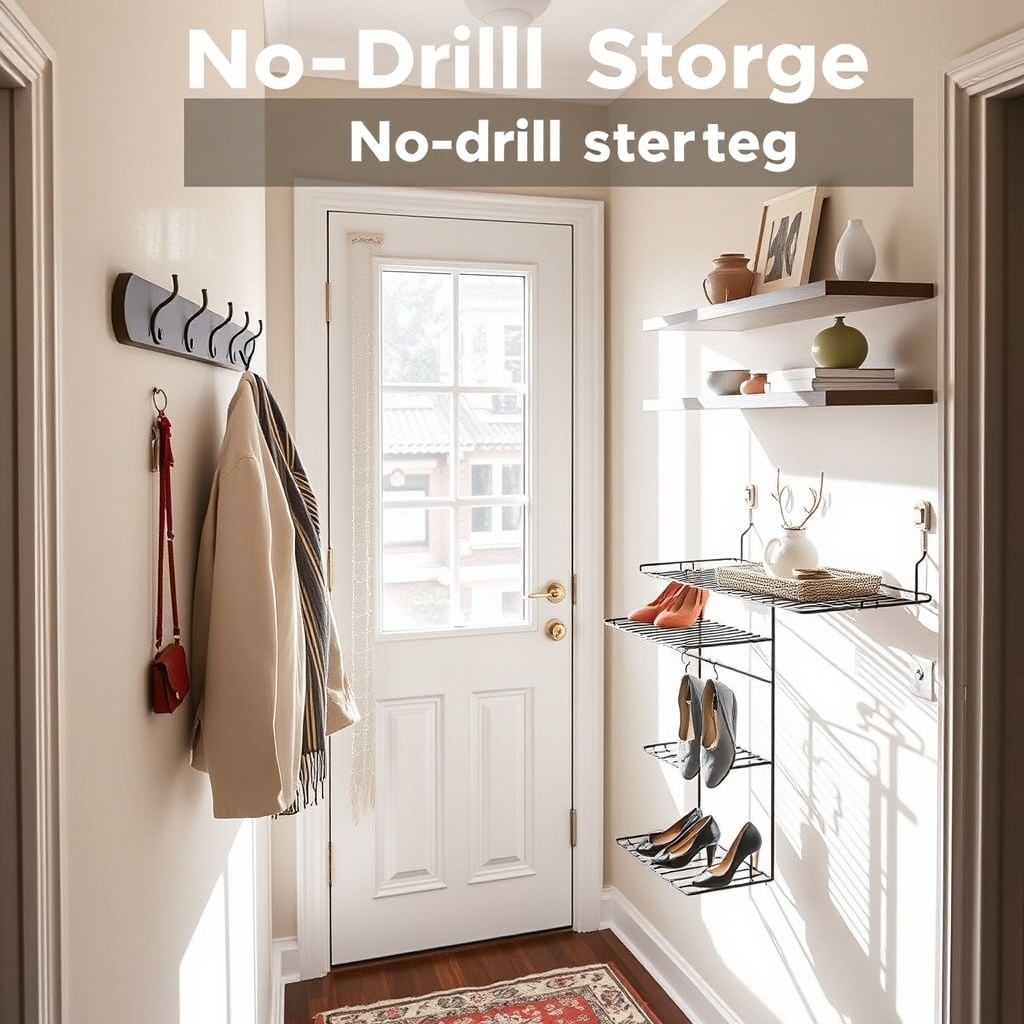
Quick buy guide — best picks by use case + CTA
- Lightweight Decor & Frames: Use certified adhesive hooks, strips, or minimal shelves. Ideal for fully cured, smooth, painted walls. (Command™ Brand)
- Bathroom/Kitchen Spices & Toiletries: Look for adhesive-mounted shelves or over-the-door racks; confirm compatibility with tile/glass and follow all prep/cure steps.
- Cookware/Books/Heavier Storage: Choose tension-pole shelving or freestanding modular systems—these provide reliable, damage free wall mount support up to 40–60 lb per pole.
- Modular/Heavy-Duty Solutions: Consider hybrid mounts that blend slip-on brackets with adhesives, or mobile freestanding pegboard units.
Research synthesis: “Adhesive solutions are ideal for lightweight decor and work best on smooth, fully cured painted walls; for heavier storage choose tension/hybrid systems.” To compare top-rated solutions or get a full apartment transformation, visit our Rental Friendly Renovation guide.
Ready to try? Choose your no drill wall storage system today and organize with confidence.
FAQ
How much weight can no drill wall storage actually hold?
On drywall, adhesives reliably hold 5–10 lb; tile or glass allows up to 15 lb. Never load beyond 70% of the product’s stated limit for safety.
What’s the safest way to remove adhesive shelves or hooks?
Pull the strip straight down, slowly and steadily. Don’t yank or angle the tab. Ensure the wall is clean and dry for the best chance of damage-free removal.
Can I use no drill wall storage on wallpaper or textured paint?
Adhesives typically don’t bond well to wallpaper or heavily textured paint and may cause peeling or bubbling. For these surfaces, over-door or freestanding options are safest.
Are over-the-door storage racks really damage free?
Yes, so long as the door isn’t jammed shut by the rack’s hooks. These racks are removed in seconds and leave no marks if chosen and used correctly.
What should I do if residue or paint chips remain after removal?
Use a citrus adhesive remover for sticky residue, and a small paint touch-up kit for chips. Document all steps for your landlord to show care was taken.
—