

Self-cleaning litter box adoption is surging in multi-cat households, but picking the right model requires more than chasing the latest features. Owners focused on per-cat health tracking, clinical accuracy, and data privacy must cut past hype to find what truly works—and what doesn’t.
Key Takeaways
- Hybrid AI-camera self-cleaning litter boxes now dominate the premium market, especially for homes with 2+ cats.
- Long-term health tracking, per-cat identification, and data privacy policies vary widely—vet every claim with hard evidence.
- Expect hidden costs, reliability tradeoffs, and some key unanswered questions on clinical validation and data export—so bring a demanding checklist to your search.
- Market snapshot — who’s buying and why now
- Why multi‑cat households are driving the shift to hybrid AI-camera boxes
- How the health‑tracking stack actually works (sensors, camera, AI, cloud)
- Accuracy & clinical validation — what’s proven and what’s marketing
- Multi‑cat identification — methods, failure modes, and fallback strategies
- Real‑world reliability — camera, app, sensors, and mechanical failures
- Litter compatibility, cat acceptance, and behavior risks
- Data access, privacy, and veterinary interoperability
- Total cost of ownership & long‑term reliability indicators
- Practical buying checklist & side‑by‑side comparison framework
- Final recommendations for buyers with multiple cats
- Appendix — 3 deep technical questions to demand answers for vendor demos
- FAQ
Market snapshot — who’s buying and why now
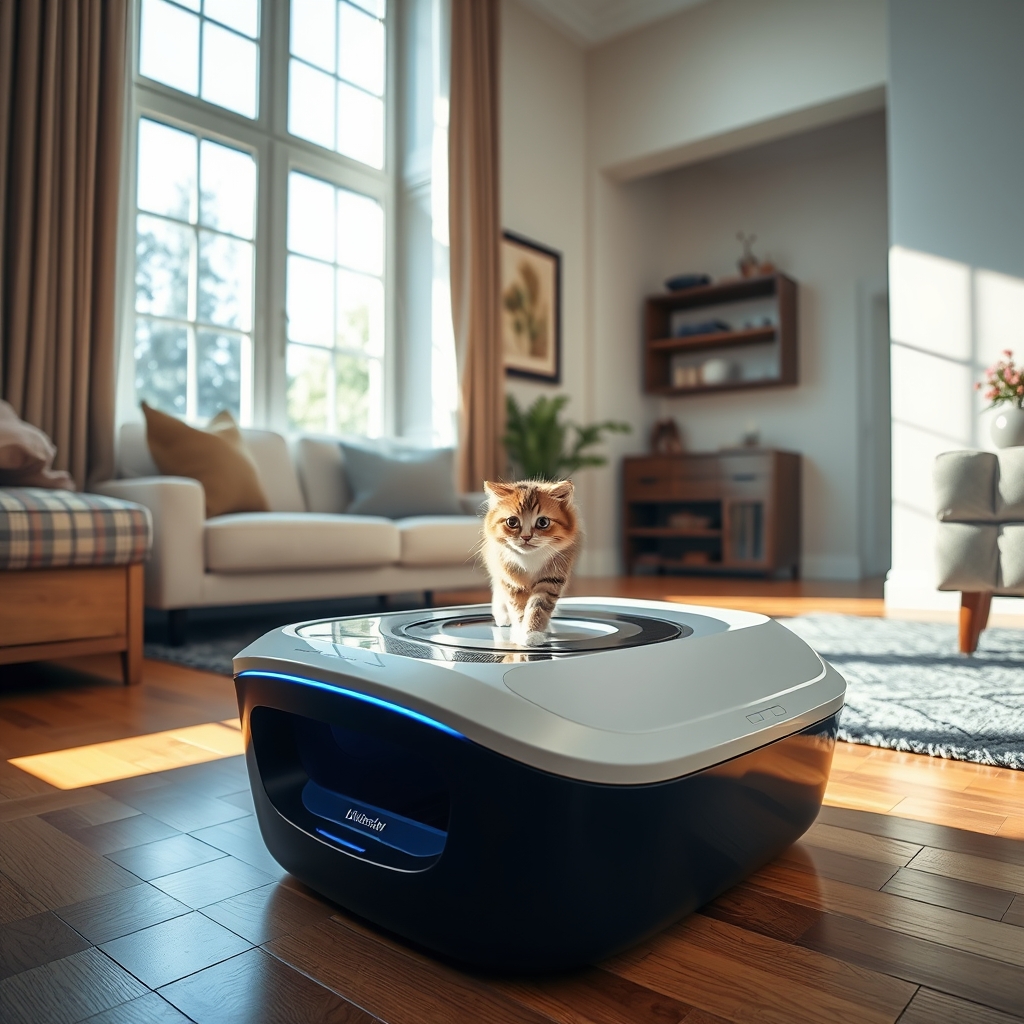
The North American market for automatic self-cleaning litter box solutions is now a $125 million industry, part of a global segment valued at $610 million in 2024. Self-cleaning units account for over 71 percent of all smart litter box purchases, with next-generation hybrid models—combining auto-scooping and AI-camera health tracking—growing at nearly 19.4 percent annually. Demand is especially concentrated among high-income, tech-forward multi-cat households (2-4 cats), who want individualized monitoring and robust data controls rather than simple automation. In fact, over 40 percent of all smart box buyers have at least two cats, and multi-cat buyers now outnumber single-cat adopters among hybrid AI camera device owners. This rapid growth is fuelling innovation and scrutiny alike.
Why multi‑cat households are driving the shift to hybrid AI-camera boxes
Multi-cat homes face unique challenges: unreliable cat identification, cross-contamination of data, and the need to watch for health changes in every cat—not just the group. The most advanced self cleaning litter box for multiple cats options now track weight, frequency, stool appearance, and trends for each cat, using a blend of smart litter box weight monitoring and AI-powered imaging. This is especially important for households with cats of similar size or appearance, or with new kittens entering the mix. According to recent consumer surveys, about 45 percent of smart-litter-box buyers have two or more cats, so manufacturers are increasingly investing in hybrid, AI-enabled models that promise higher accuracy and better health outcomes.
How the health‑tracking stack actually works (sensors, camera, AI, cloud)
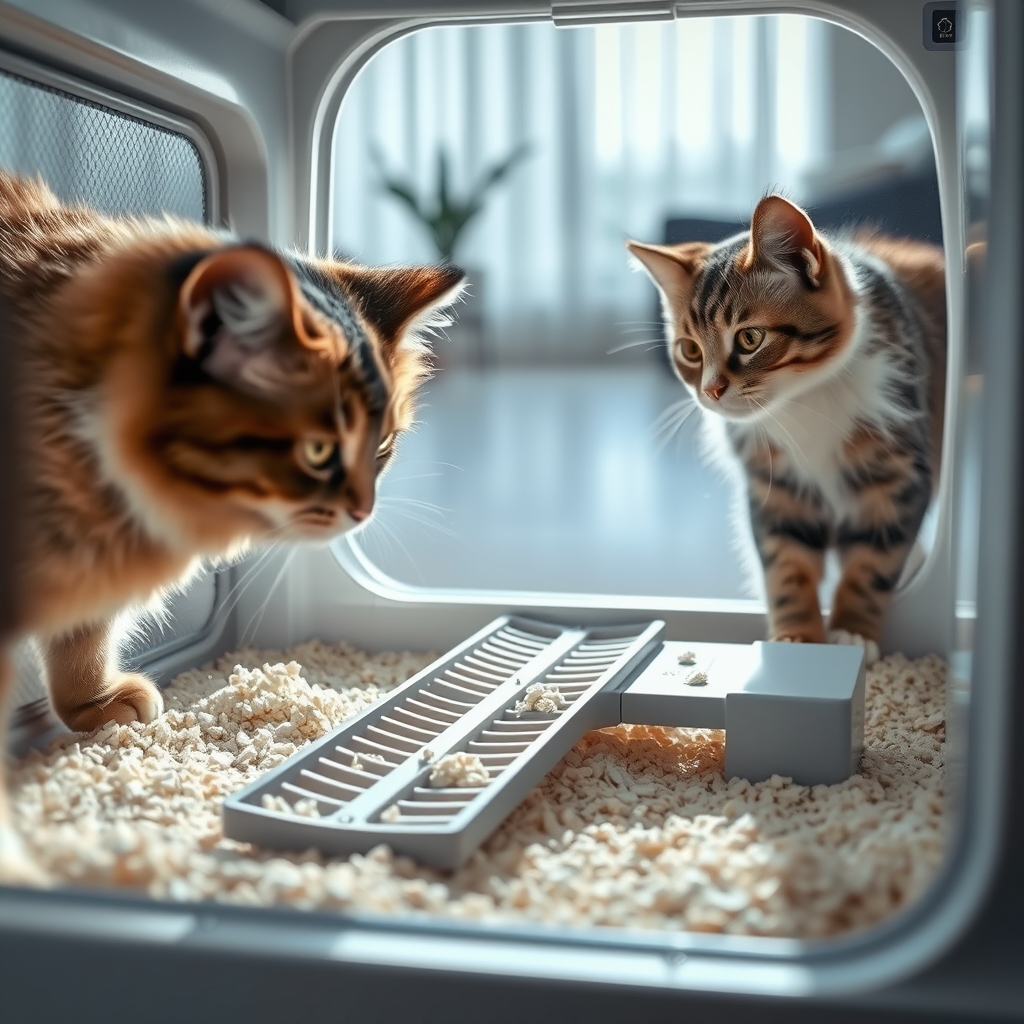
Modern automatic litter box health tracking systems use multiple sensors—weight plates to log entries and exits, radar or PIR for motion, and increasingly, an AI litter box with camera system to visually document events. The process typically works like this:
- Weight sensors record the mass on entry, identifying which cat used the box (if weights are distinguishable).
- Timing sensors and cameras track frequency, duration, and stool appearance—flagging whether urination or defecation occurs and analyzing stool consistency.
- Edge (on-device) processing may determine the basics to preserve privacy. More advanced AI features, such as pattern recognition or diagnostics, are often pushed to the cloud where machine learning models interpret combined sensor and visual data, sometimes in near real time.
While hybrid models claiming both auto-cleaning and per-cat health monitoring (including AI-camera features) are selling fastest, most brands won’t share detailed data-processing flows or model retraining practices. Some allow only limited manual reassignment if the system misattributes visits, raising the importance of clear fallback procedures. For owners, probing how this technical stack operates—not just what’s advertised—is essential.
Accuracy & clinical validation — what’s proven and what’s marketing
Despite bold marketing, there is little published clinical validation proving that automatic litter box health tracking alerts (for example, UTI detection, constipation, or weight changes) match real veterinary results. While leading manufacturers tout AI models trained on thousands of samples, specifics about study design, false-alert rates, and direct vet comparisons are sparse, with one research report explicitly noting this as a top unsolved concern. Always ask for:
- Peer-reviewed accuracy studies comparing false positive and negative rates against actual veterinary exams.
- Methodology for distinguishing normal variance versus genuine issues—especially for subtle symptoms.
- Documentation on how the AI adapts to breed, age, and health status.
Expect vendors to have only partial answers. If a manufacturer cannot provide direct vet validation, specific ID benchmarking, and raw event logs, be skeptical about their health claims.
Multi‑cat identification — methods, failure modes, and fallback strategies
Correctly attributing each visit is make-or-break for multi-cat buyers. Most smart boxes use weight-profiling to identify cats, while some add facial or pose recognition via internal cameras. Hybrid models may combine both for higher confidence. However, frequent user complaints highlight:
- Misidentification when cats have similar body weights or body types.
- Inability to distinguish kittens or young cats whose weight changes rapidly.
- Partial entry events—when a cat steps in but does not fully trigger sensors—leading to missed or scrambled logs.
- Infrequent re-training options and poor manual reassignment workflows.
Before purchase, insist on a clear explanation (or proof) for how the system manages failures. Run simple at-home tests after setup. Even top-tier models still benefit from regular user audits to prevent health tracking drift. Some buyers prefer models that allow easy manual corrections for errors.
Real‑world reliability — camera, app, sensors, and mechanical failures
The most frequent reliability issues with advanced AI litter box with camera models include:
- Internal cameras not working, becoming inaccessible, or footage being impossible to view or download by the owner. In some models, the camera serves as a marketing feature without functional transparency (source).
- App sync lag after several months, where health data or notifications are delayed or missing, affecting peace of mind and intervention timing (source).
- False sensor triggers, causing premature or missed cleaning cycles. Motor jams are infrequent but create more noise than expected, which can bother cats and owners alike.
- Consumable parts (filters, waste liners) and warranties vary—check before buying.
Check user forums and long-term product reviews for evidence of unresolved mechanical issues—especially for high-priced units.
| Feature | Traditional Auto-Scoop | Hybrid AI-Camera Box |
|---|---|---|
| Waste removal | Basic rake to bin | Rake + sealed waste system |
| Sensors | Simple IR only | SmartScale, radar, AI vision |
| Per-cat health tracking | No | Weight + frequency + stool analysis |
| App integration | Rare | Wi-Fi, real-time, export options |
| Multi-cat reliability | Low | Variable—depends on manual corrections |
| Approximate cost | $50-$200 | $300-$900+ |
Litter compatibility, cat acceptance, and behavior risks
Most self-cleaning litter box systems perform best with mid-grain, clumping clay litters. Some may tolerate plant-based or silica formulas, but almost all have limited compatibility with non-clumping or crystal litters (external source). Using an incompatible litter can cause mechanical breakdowns, incomplete cleaning cycles, or, worst of all, cause a cat to avoid the box entirely. Watch for signs of hesitancy, over-grooming, or accidents outside the box during the first two weeks—these signal the need for a different litter or device. Introducing devices slowly, alongside familiar litter, helps acceptance rates.

Data access, privacy, and veterinary interoperability
Clinic-grade AI litter box with camera solutions sell data access and privacy as major strengths, but you must verify:
- Whether you can actually view or download internal camera videos or only receive AI-generated event summaries.
- How raw health logs or sensor data can be exported, if at all, for veterinary review or second opinions. Few brands offer seamless integration with veterinary EMRs (external research).
- What the data retention, deletion, and sharing policies are—especially for cloud-connected models. Ask about encryption standards and third-party access.
Recent user reports flag data privacy as a top concern, with many brands offering only partial answers or none at all. Your personal review of sample exports is critical.
Total cost of ownership & long‐term reliability indicators
Entry-level self-cleaning units start at $300, but best-in-class, full-cycle hybrid AI models with full per-cat diagnostics reach $699 to $899 or more (external guide). Consider:
- Recurring costs for litter, filters, waste liners, and optional diagnostics subscriptions (which may range from $5 to over $20 monthly).
- Expected part failure cadence: WiFi modules, motors, and sensors can need replacement every 1-2 years; warranty coverage varies.
- Customer support quality and speed—scan long-term Amazon or Chewy reviews for true failure rates and service experiences.
For litter robot alternative seekers, also compare ongoing costs and support reliability before committing.
Practical buying checklist & side‑by‑side comparison framework
Bring this actionable checklist and ask every vendor to respond in writing or with sample data:
- Proof of clinical health alert accuracy—ideally a summary of peer-reviewed validation studies.
- Real multi-cat ID test logs, especially with similar cats/kittens. Ask exactly how the system handles misidentification.
- Sample raw event and video data exports; details on whether you can view/download what the camera records.
- Explicit warranty terms and uptime/failure statistics based on user population size.
- Direct evidence of EMR/vet-software export options or open-access API.
Use this comparison table when shortlisting models:
| Requirement | Model A | Model B |
|---|---|---|
| Clinical validation level | ||
| Multi-cat identification method | ||
| Raw data / video export | ||
| Subscription costs | ||
| Warranty duration/coverage | ||
| Uptime/reliability stats |
For more side-by-side pet tech comparisons, see our detailed guides on freeze-dried dog food and pet GPS trackers.
Final recommendations for buyers with multiple cats
If you have two or more cats in your household, prioritize hybrid AI-camera units with independent third-party clinical validation, robust fallback strategies for identification, and fully transparent data control/export features. Interim features like per-cat weight tracking or basic alerting aren’t enough. Growing research and consumer evidence confirm that per-cat capability and accuracy should drive your purchase. The dominant hybrid models in this segment are evolving fast, but high failure rates, data privacy ambiguity, and lack of accessible health validation are still widespread. Only buy from vendors able to provide clinical evidence, sample logs, and real customer reliability history—not just a glossy feature list. For those seeking the absolute best automatic litter box health tracking solution, robust multi-cat capability and vendor transparency are non-negotiable.
Appendix — 3 deep technical questions to demand answers for vendor demos
- What independent, peer-reviewed clinical validation supports the AI-powered health alert system in this device? Can I access study results and review sample false alert rates?
- How does the identification system handle cases of similar-weight adults, kittens, and partial entries? What is your fallback correction/retraining workflow, both automatic and manual?
- Can I access and export all raw sensor data and internal camera footage? What policies govern retention and sharing, and is there interoperability with my vet’s EMR?
Review each of these in detail, and don’t settle for incomplete answers—top performance among smart litter box weight monitoring solutions depends on it.
FAQ
Are AI camera self-cleaning litter boxes worth it for multi-cat households?
For homes with two or more cats, AI camera self-cleaning litter boxes can offer much better health tracking and auto-scooping convenience—if you choose a model with proven multi-cat identification and robust data access. However, buyer beware: not all AI claims are validated and hybrid models often cost $700 or more.
What types of litter work in self-cleaning litter boxes?
Most models require clumping clay litter to function properly. Some tolerate plant-based or silica, but avoid non-clumping and crystal litters unless specifically approved. Incompatible litter can clog the mechanism or cause cats to reject the box.
Can I export my cat’s health data from these boxes for vet review?
Some brands offer raw data export or event reports, but many do not—despite advertising it. Always confirm before buying, and ask for a sample data file. Integration with veterinary EMRs is still rare.
How do these boxes tell my cats apart?
Most identify cats by weight, some add AI facial or pose recognition, and the best use both. Success rates vary, especially with similar-sized cats or kittens. Always test ID logs at home and ask the vendor about manual correction options.
What’s the expected lifespan and maintenance cost?
Premium models should last several years. Expect periodic replacement costs for waste liners, filters, and (every 1-2 years) sensors or motors. Warranties and subscription costs also vary widely by brand.